Can I Be Blacklisted or Evicted for Disputing a Rent Increase in NSW?
Plenty of NSW renters pay a rent increase they think is unfair because they're scared of a black mark or a notice to leave. Since May 2025, the rules give you a lot more cover.
So the rent increase notice has landed, and it's more than you can stomach. But you've heard the stories: push back and you end up on a tenant blacklist, or the landlord finds a reason to end your lease.
That fear keeps a lot of renters quiet, and it costs them. $40 a week is $2,080 a year. So it's worth knowing what NSW law actually lets a landlord do.
Can I be put on a tenant blacklist for disputing the rent?
The "blacklists" are tenancy databases that agents check when you apply for a place. NSW law only lets you be listed once your tenancy has ended, and only if you were named on the agreement. Even then, there are just two grounds. Either you left owing more than the bond because you breached the agreement, or the Tribunal ended your agreement because of something you did wrong.
Disputing a rent increase isn't one of them, and neither is applying to NCAT about it. NSW Fair Trading is clear that even falling behind on rent or getting a termination notice isn't enough on its own. Before listing anyone, the landlord or agent has to tell them in writing and give them at least 14 days to respond. Listings older than three years have to be removed.
Can my landlord end my lease because I pushed back?
This is where NSW changed a lot. Since 19 May 2025, a landlord needs one of the reasons set out in the law to end a tenancy, like selling the place, major renovations, or moving in themselves. "This tenant asked questions about the rent" isn't on the list.
If a termination notice turns up after you've stood up for your rights, you can apply to the Tribunal for an order that it was retaliatory. If the Tribunal agrees, the notice has no effect. The clock is short, though. For most notices you have 14 days to apply, or 30 days if the stated reason is something like a sale or renovations.
Will the agent hold it against me?
Some might, and the rules can't stop that. NSW law protects you from a database listing and a payback termination notice, but it can't make an agent friendly, and a so-so reference down the track is hard to challenge.
Keep in mind that property managers negotiate rents for a living. A tenant pushing back on an increase is an ordinary part of their week, and it isn't their home on the line, so it's rarely as personal for them as it feels for you.
What you can control is how the ask lands. A tenant with a clean payment history who questions the increase with evidence, not frustration, is the kind of tenant agents don't want to lose.
What makes a landlord more likely to agree?
Two things help most: evidence about the rent, and a reminder of what kind of tenant you are. Comparable rentals nearby, rent trends in your area, cost of living and any maintenance that's been let slide can all support a case for a smaller increase. Then add your side of the ledger: rent paid on time, a well-kept home, no dramas. A landlord choosing between a few dollars a week and an empty property with an unknown new tenant often ends up keeping you.
None of this is quick, and agents often count on that. But small wins add up: $15 a week less is $780 a year.
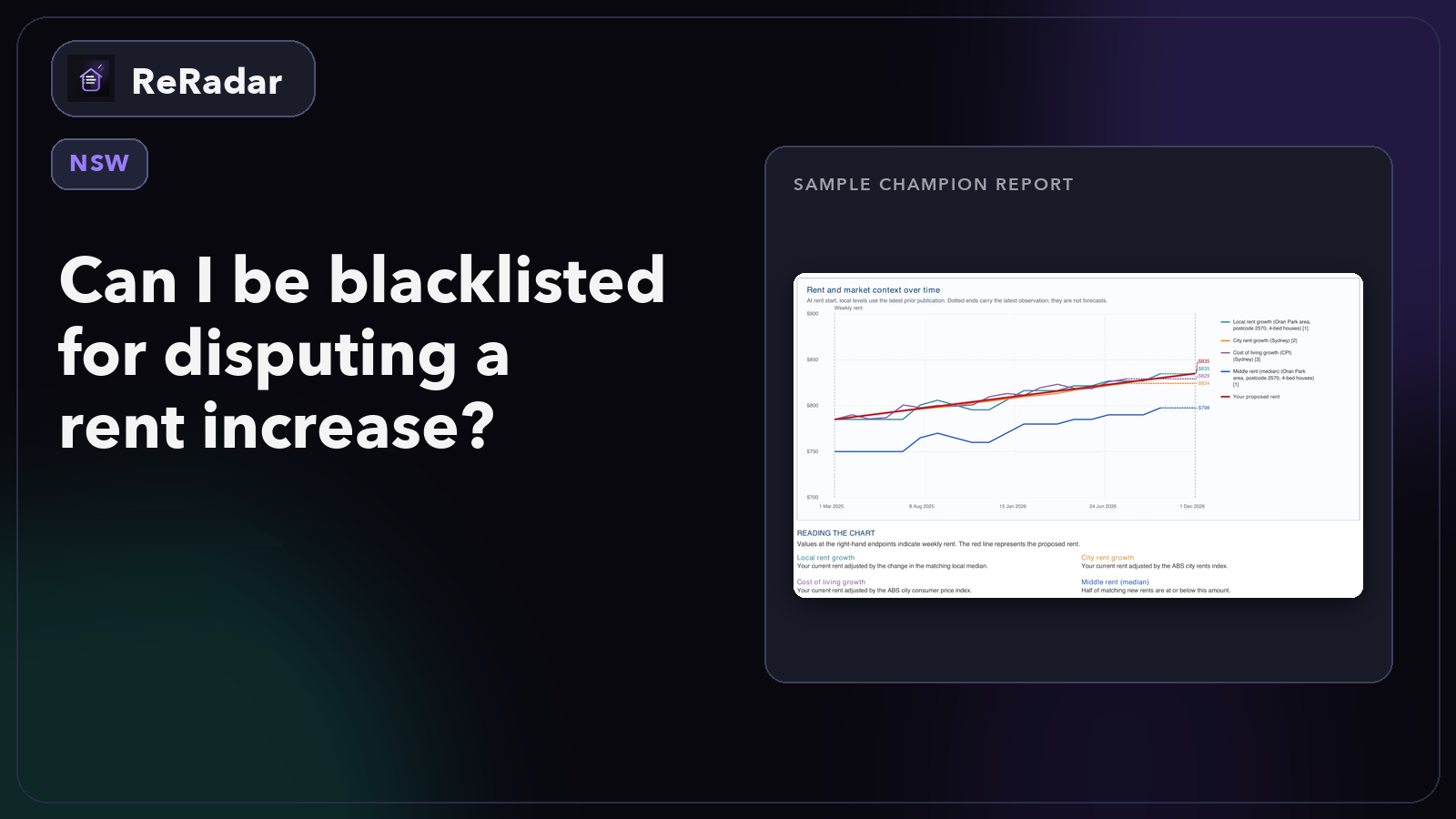
Champion does the heavy lifting on the comparison. It finds rentals like yours nearby and pulls them into a case for a smaller increase you can put to your agent. Check it out here.
What not to do when you push back
- Do not stop paying rent while you sort it out. That's an actual breach, and breaches are what get people listed.
- Do not miss the 30 days to apply to NCAT if talking doesn't work. Our NSW rent increase guide explains the timing.
- Do not let a termination notice sit if you think it's payback. You may only have 14 days.
- Do not go in without evidence. An agent can easily say no to "it's too much".
Sources
Blacklists and evictions in NSW: quick answers
Can I be blacklisted for disputing a rent increase in NSW?
No. You can only be listed after your tenancy ends, if you left owing more than the bond for a breach, or the Tribunal ended your agreement because of something you did wrong.
Can a landlord end my lease without a reason in NSW?
Not since 19 May 2025. A landlord now needs one of the reasons set out in the law, such as a sale, major renovations or moving in.
What is a retaliatory termination notice?
A notice given because you tried to enforce your legal rights. You can apply to the Tribunal for an order that it has no effect, usually within 14 days.
How long does a tenancy database listing last in NSW?
Listings older than three years must be removed.
Do I have to be told before I'm listed?
Yes. The landlord or agent must tell you in writing and give you at least 14 days to respond.
Your landlord picked that number.
Champion shows you whether it stacks up, and gives you a report and an email to send if it doesn't.
Get my report